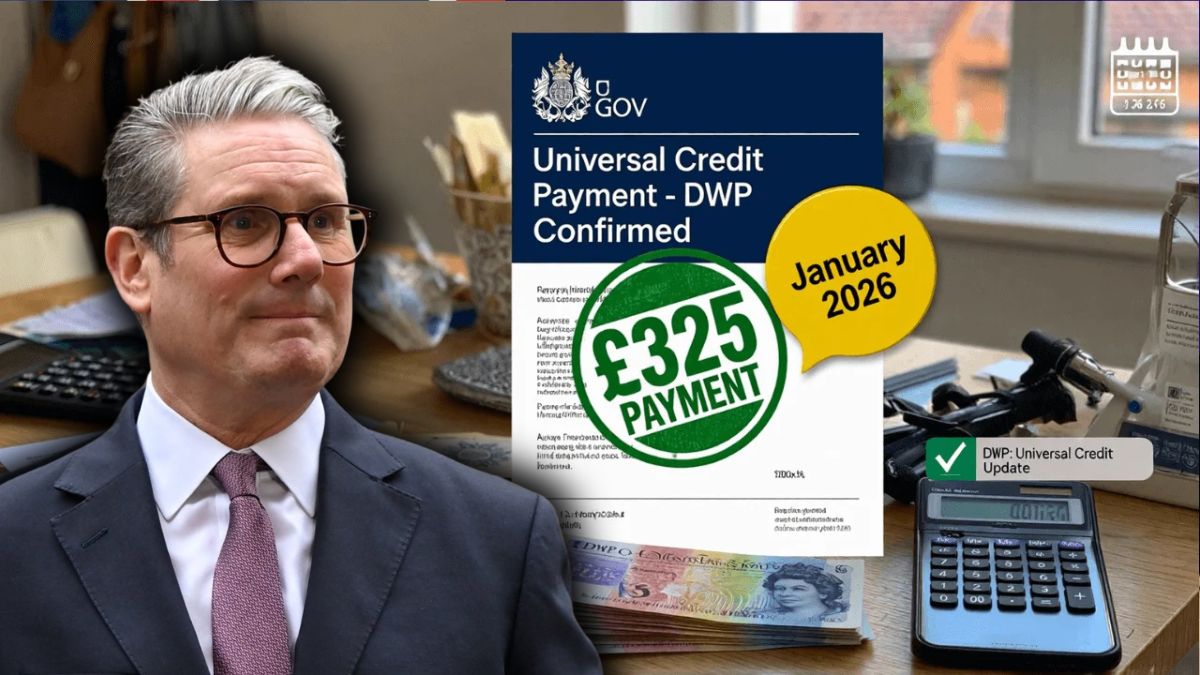
The Department for Work and Pensions (DWP) has confirmed a £325 one-off Universal Credit Cost of Living Payment, scheduled to be issued during January 2026.
The payment is designed to support low-income households facing continued pressure from energy bills, rent and food costs. It will be paid automatically to eligible claimants and will not affect regular Universal Credit awards.
Here is what has been confirmed, who qualifies, and what claimants should check now.

What Is the £325 Universal Credit Payment?
The £325 payment is a one-off, non-repayable support payment for eligible claimants receiving Universal Credit during a defined qualifying period.
It is:
- Separate from monthly Universal Credit
- Paid automatically
- Tax-free
- Not counted as income
- Not repayable
It forms part of the government’s ongoing cost-of-living support measures.

When Will the £325 Be Paid?
The DWP has confirmed the payment will be made in January 2026.
While an exact single payment date has not been specified, similar payments have previously been:
- Issued over a 2–3 week window
- Paid directly into claimants’ registered bank accounts
- Staggered to avoid processing delays
Eligible households should expect the payment during January, with formal dates confirmed on GOV.UK closer to rollout.
Who Qualifies for the £325 Payment?
Eligibility depends on receiving Universal Credit during a specific qualifying assessment period set by the DWP.
You are likely to qualify if:
- You had an active Universal Credit claim
- You were entitled to at least £1 during the qualifying assessment period
- Your award was not reduced to £0 for the entire period
Both working and non-working claimants can qualify, provided they meet entitlement criteria.
What Is a “Nil Award”?
A nil award occurs when your Universal Credit entitlement is reduced to £0 during an assessment period, often due to earnings.
If your claim was reduced to zero for the entire qualifying window, you will not usually qualify.
If your award was reduced but not fully to zero, you may still be eligible.
Couples and Joint Claims
For joint Universal Credit claims:
- Only one £325 payment is made per household
- It is not paid per individual
- The payment goes into the nominated bank account on the claim
Do You Need to Apply?
No.
The DWP has confirmed that the £325 payment will be issued automatically.
You do not need to:
- Complete a separate form
- Contact Universal Credit
- Provide additional bank details
Be cautious of scam messages claiming you must “apply” to receive the payment.
How Will It Appear in Your Bank Account?
The payment will appear as a separate bank transaction.
It will not replace your regular Universal Credit payment and will not be combined with it.
The reference may include wording linked to DWP or cost-of-living support.
Will the £325 Affect Other Benefits?
No.
The DWP has confirmed the payment:
- Does not reduce Universal Credit
- Does not count towards the benefit cap
- Does not affect Housing Benefit
- Does not impact Council Tax Reduction
- Is ignored for means-tested calculations
It is treated as additional support.
Why the DWP Is Issuing the Payment
Although inflation has eased from previous peaks, many households continue to face:
- Elevated energy costs
- Higher food prices
- Rising housing expenses
The January timing reflects continued winter financial pressure and post-Christmas household strain.
What Claimants Should Do Now
There is nothing you need to do if you are eligible.
However, you should:
- Ensure your bank details are correct in your Universal Credit account
- Check your online journal regularly
- Report any changes in circumstances promptly
- Be alert to scams
Keeping your claim accurate will reduce the risk of delays.
What If You Don’t Receive It?
If January 2026 ends and you believe you qualified but did not receive the payment:
- Check your bank statements carefully
- Review your Universal Credit statement for the qualifying period
- Check messages in your UC journal
- Contact Universal Credit if necessary
Most issues relate to eligibility rules rather than payment processing errors.
How This Compares to Previous Payments
The £325 payment mirrors previous cost-of-living support rounds issued between 2022 and 2024.
While not a permanent increase to Universal Credit rates, it provides short-term support to ease winter pressures.
FAQs
When will the £325 Universal Credit payment be made?
It is scheduled for January 2026, with payments expected to be staggered over several weeks.
Do I need to apply?
No. Payments are automatic for eligible claimants.
Who qualifies?
Universal Credit claimants entitled during the DWP’s qualifying assessment period and not subject to a full nil award.
Will this reduce my Universal Credit?
No. It is paid separately and does not affect your regular entitlement.
Is the payment per person or per household?
It is paid once per Universal Credit claim, not per individual.
What if I had a zero award?
If your entitlement was £0 for the entire qualifying period, you will not usually qualify.