
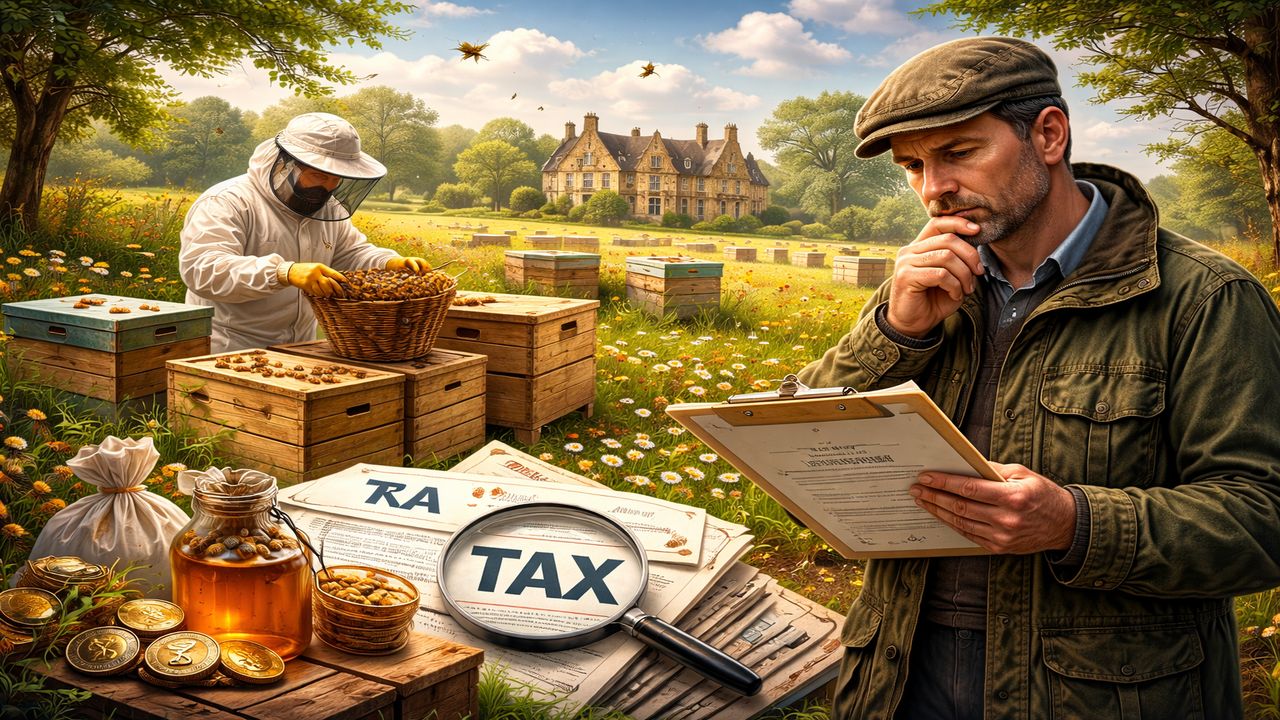
A quiet gesture — allowing a local beekeeper to place hives on your land — may feel neighbourly and harmless. But depending on how the arrangement is structured, it can have tax and legal implications under UK land and agricultural rules.
While the story may sound dramatic, the issue at its heart is straightforward: how land is classified and used can affect tax treatment, even if the landowner earns nothing.
Here’s what UK landowners, particularly retirees with small plots or fields, need to understand before saying yes to hives.

Does Hosting Beehives Make Land “Agricultural”?
In the UK, beekeeping is generally considered an agricultural activity when carried out commercially.
However, whether your land is reclassified or taxed differently depends on several factors, including:
- Whether the beekeeper operates as a registered business
- Whether rent is paid
- Whether the land is formally licensed
- How the arrangement is declared
Simply allowing a few hives on private land does not automatically trigger a new tax bill — but formal commercial use can affect classification in certain circumstances.

When Tax Issues May Arise
Potential tax implications may relate to:
1. Business Use of Land
If land is formally used for a commercial activity, it may be treated differently for:
- Business rates
- Agricultural relief considerations
- Capital Gains Tax (CGT) treatment
2. Income Tax
If rent is received — even a small amount — it may be taxable income.

3. Inheritance Tax and Agricultural Property Relief
Land classified as agricultural may qualify for certain reliefs, but incorrect classification can complicate matters.
The key point: the legal use of the land matters more than the owner’s intention.
Does It Matter If You Earn Nothing?
Yes, sometimes.

Even if no rent changes hands, if a professional beekeeper registers your land parcel for:
- Agricultural subsidies
- Environmental schemes
- Business purposes
it may appear in official records as supporting commercial agricultural activity.
That does not automatically mean you owe tax — but it may raise administrative questions.
Latest Stories
 Council Tax and Agricultural Use Rules Explained for Hive Hosts, Check Your Land’s Tax Status First
How These Situations Usually Develop
In many cases:
- A landowner informally agrees to host hives
- No written agreement is made
- The beekeeper registers the hive location
- Administrative records link the parcel to commercial activity
Months later, a query or letter arrives seeking clarification.
Most issues stem from lack of documentation, not wrongdoing.

How to Protect Yourself Before Agreeing
1. Check Your Land Classification
Before allowing hives, contact:
- Your local council
- HM Revenue & Customs (HMRC), if relevant
- A land agent or solicitor
Clarify whether hosting hives affects:
- Council tax or business rates
- Agricultural status
- Relief eligibility
2. Put a Simple Agreement in Writing
You do not need a complex contract.
Latest Stories
 Retiree Faces Tax Bill After Letting Beekeeper Use His Land – Handshake Deal Turns Into Tax Dispute for Landowner
A short written agreement should clarify:
- The beekeeper is responsible for the hives
- The beekeeper declares any business activity
- The landowner is not operating an agricultural business
- Who is responsible if tax treatment changes
Written clarity protects both sides.
3. Clarify Whether Rent Is Paid
If rent is paid:

- It may count as rental income
- It may need declaring to HMRC
Some landowners prefer a nominal annual fee to formalise the arrangement. Others keep it strictly non-commercial.
Either way, clarity matters.
4. Confirm How the Beekeeper Registers the Site
Ask:

- Is my land parcel being listed for subsidies?
- Is it part of your agricultural holding?
- Are you claiming grants linked to this location?
Transparency prevents surprises.
Why Retirees Are Often Caught Off Guard
Many retirees think in terms of:
- Neighbourly goodwill
- Informal rural agreements
- “Helping someone out”
But administrative systems operate differently.

Land use is categorised by activity, not sentiment.
That gap between informal trust and formal classification is where problems arise.
Does This Mean You Should Refuse Beekeepers?
Not at all.

Beekeeping:
- Supports biodiversity
- Aids pollination
- Benefits rural ecosystems
The solution is not avoidance — it is documentation.
What If You Already Have Hives on Your Land?
If hives are already present:

- Review whether any written agreement exists
- Confirm whether you receive rent
- Ask the beekeeper how the land is registered
- Seek clarification from your local authority if concerned
Early clarification is easier than resolving a dispute later.
Could You Be Liable for the Beekeeper’s Tax?
Generally, no.
You are not automatically liable for a beekeeper’s business taxes simply because their hives sit on your land.

However, misclassification or unclear arrangements could affect how your land is treated administratively.
Professional advice is recommended if formal letters are received.
The Wider Rural Issue
Across the UK, rising land values and tighter tax enforcement mean:
- Informal rural arrangements are scrutinised more closely
- Agricultural definitions matter more
- Subsidy schemes create paper trails
The countryside increasingly intersects with compliance systems.
Practical Checklist for Landowners
Before accepting hives:
- Confirm land classification
- Clarify whether the beekeeper operates commercially
- Decide whether rent is involved
- Draft a short written agreement
- Keep records of communication
- Review annually
Small steps prevent larger misunderstandings.
FAQs
Does hosting beehives make my land agricultural?
Possibly, if the activity is commercial. Classification depends on how the land is declared and used.
Do I owe tax if I earn no money?
Not necessarily. But land use classification can still matter administratively.
Should I have a written agreement?
Yes. Even a simple one-page agreement protects both parties.
Can I be liable for the beekeeper’s taxes?
No, unless you are formally involved in the business.
Should I contact HMRC?
If you receive a letter or are unsure about classification, seek clarification promptly.
Does this affect inheritance tax?
It may affect agricultural relief status in certain circumstances. Professional advice is recommended.