
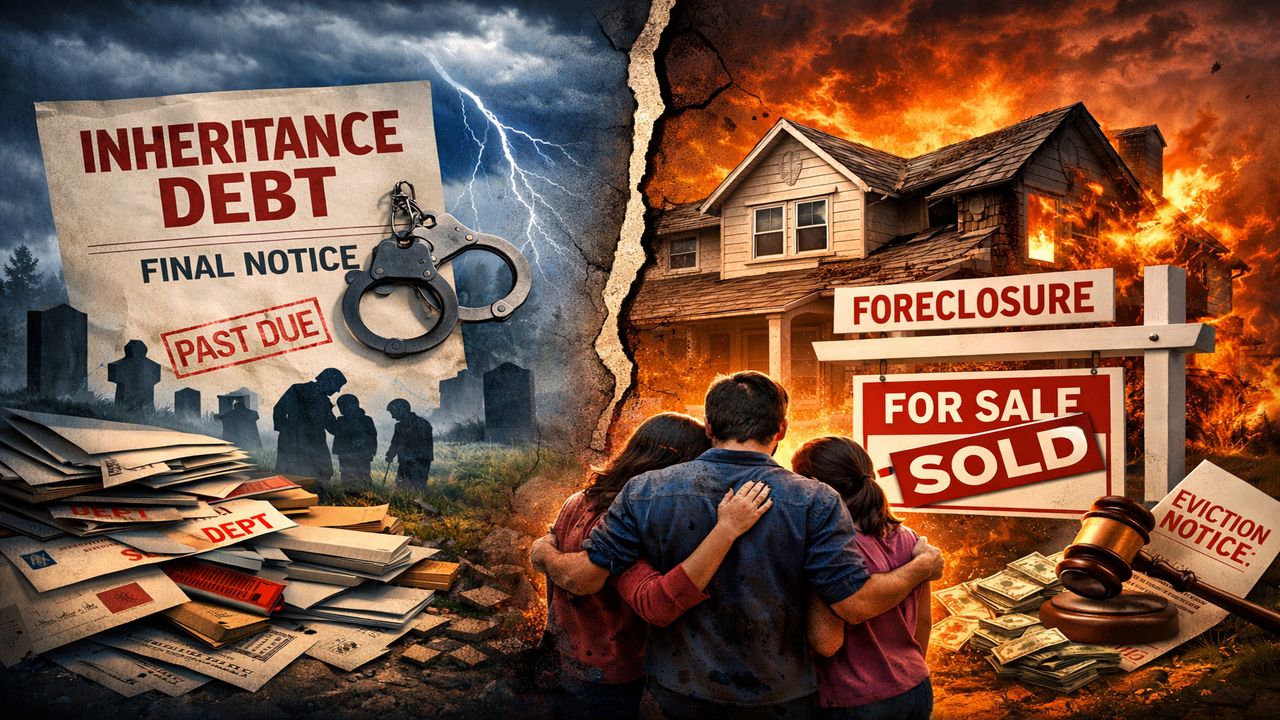
The image of a bailiff arriving at a pensioner’s house makes for a powerful story. But behind the emotion lies a legal reality that many families in the UK do not fully understand: when you accept an inheritance, you may also accept responsibility for debts attached to it.
Reports of homes being sold to settle inherited liabilities can sound extreme. In most cases, they are avoidable — but only if heirs understand their legal options under UK probate and inheritance law.
Here is what actually happens when debts and property become legally linked — and how to protect yourself.

When the Law Enters the Living Room
For a family, a house is memory, identity and stability.
For the courts, it is an asset listed on a probate inventory.
Under UK law, when someone dies, their estate — including property, savings and possessions — is used first to pay off outstanding debts. Only after liabilities are settled is the remaining estate distributed to beneficiaries.
Latest Stories
 UK Landowners Warned to Clarify Hive Agreements, What It Means for Tax and Property Status
If the estate includes:
- Unpaid loans
- Outstanding credit cards
- Tax liabilities
- Business guarantees
- Joint financial obligations
then creditors may have a legal claim.
If there is insufficient cash in the estate, property may need to be sold.

Can You Inherit Someone Else’s Debt?
In the UK, you do not automatically inherit personal debt in your own name.
However, debts attached to the estate must be settled before assets pass to beneficiaries.
This means:

- If the estate is insolvent (debts exceed assets), beneficiaries may receive nothing.
- If a property is the main asset, it may have to be sold to pay creditors.
The key distinction is this:
You do not become personally liable for the deceased’s debt — unless you were already legally connected to it (for example, as a joint borrower or guarantor).
How Inheritance Complications Arise
Problems often occur where:
Latest Stories
 Council Tax and Agricultural Use Rules Explained for Hive Hosts, Check Your Land’s Tax Status First
- The deceased had multiple beneficiaries sharing a property
- A property was jointly owned with unclear arrangements
- A family business had unpaid liabilities
- One heir signed as guarantor years earlier
- Tax obligations were underestimated
In complex estates, misunderstandings can lead to disputes, court orders or forced sales.
What Happens if There’s a Dispute?
If beneficiaries cannot agree on how to handle a property, or if creditors seek recovery, the matter may go before the court.
A judge can order:

- Sale of a jointly owned property
- Division of proceeds
- Settlement of debts from sale proceeds
To the court, a house is an asset capable of satisfying liabilities.
Emotion does not override legal entitlement.
Why These Cases Feel So Harsh
Inheritance law is designed around financial clarity, not sentiment.
Latest Stories
 Retiree Faces Tax Bill After Letting Beekeeper Use His Land – Handshake Deal Turns Into Tax Dispute for Landowner
The legal principle is simple:
Assets and liabilities travel together.
If someone accepts an estate without understanding its debts, they may later discover that what looked like a gift carries financial consequences.

This can create family fractures that last years.
How to Protect Yourself Before Accepting an Inheritance
1. Request a Full Estate Inventory
Before agreeing to anything, ask for:
- A detailed list of assets
- Outstanding debts
- Guarantees
- Tax liabilities
- Mortgage balances
Do not rely on informal family assurances.

2. Understand Your Legal Options
Under UK law, you generally have three choices when inheriting:
- Accept the inheritance outright
- Refuse (disclaim) the inheritance
- Accept with caution while ensuring debts are settled first through the estate
If the estate appears insolvent, professional legal advice is essential.
3. Check for Personal Liability
You may become personally responsible if:

- You co-signed a loan
- You were a guarantor
- You held a joint mortgage
- You jointly owned property as “joint tenants”
In such cases, the liability is not inherited — it already existed.
4. Seek Legal Advice Early
Probate solicitors deal with these issues regularly.
The cost of early advice is often far lower than the cost of resolving a dispute after signing paperwork.

Grief can cloud judgment. Professional distance helps.
What About Jointly Owned Property?
If a property is held as:
Joint Tenants
Ownership passes automatically to the surviving owner, outside the will.

Tenants in Common
The deceased’s share forms part of the estate and may be used to settle debts.
Understanding the ownership structure is crucial.
Can a Beneficiary Lose Their Own Home?
In rare cases, if someone:

- Personally guaranteed a relative’s debt
- Accepted estate responsibilities improperly
- Failed to administer an insolvent estate correctly
they could face financial exposure.
However, simply inheriting does not usually put your existing personal home at risk unless you were legally connected to the debt.
Why These Cases Are Becoming More Common
Several trends contribute to increased complexity:
- Rising property values
- Cross-border families
- Blended families
- Informal financial arrangements
- Older generations acting as loan guarantors
As estates grow more complicated, so do disputes.
Emotional vs Legal Reality
Families often assume inheritance is about dividing possessions.
In practice, probate is about:
- Identifying assets
- Settling liabilities
- Distributing what remains
When communication is poor, resentment fills the gap.
Practical Steps If You Are Facing an Inheritance
If you learn you may inherit property:
- Do not sign documents immediately.
- Ask for full financial disclosure.
- Confirm whether debts exceed assets.
- Clarify ownership status of any property.
- Seek probate advice if uncertainty exists.
Early action prevents long-term damage.
What This Is Not
It is not:
- A government policy seizing homes randomly
- A new inheritance tax rule
- A blanket power to take houses for distant relatives’ debts
It is standard probate law functioning as designed — sometimes painfully.
FAQs
Can I inherit my relative’s debt in the UK?
No. Debts are paid from the estate. You are only personally liable if you were a joint borrower or guarantor.
Can a house be sold to pay estate debts?
Yes. If there is insufficient cash, property may be sold to settle liabilities.
Should I sign inheritance papers immediately?
No. Review the full estate inventory before accepting.
What happens if the estate has more debt than assets?
The estate is insolvent. Beneficiaries usually receive nothing, and debts are settled in priority order.
Can I refuse an inheritance?
Yes. You can disclaim an inheritance formally.
When should I get legal advice?
If there are debts, multiple beneficiaries, business interests or property disputes.